By DealShore Motors
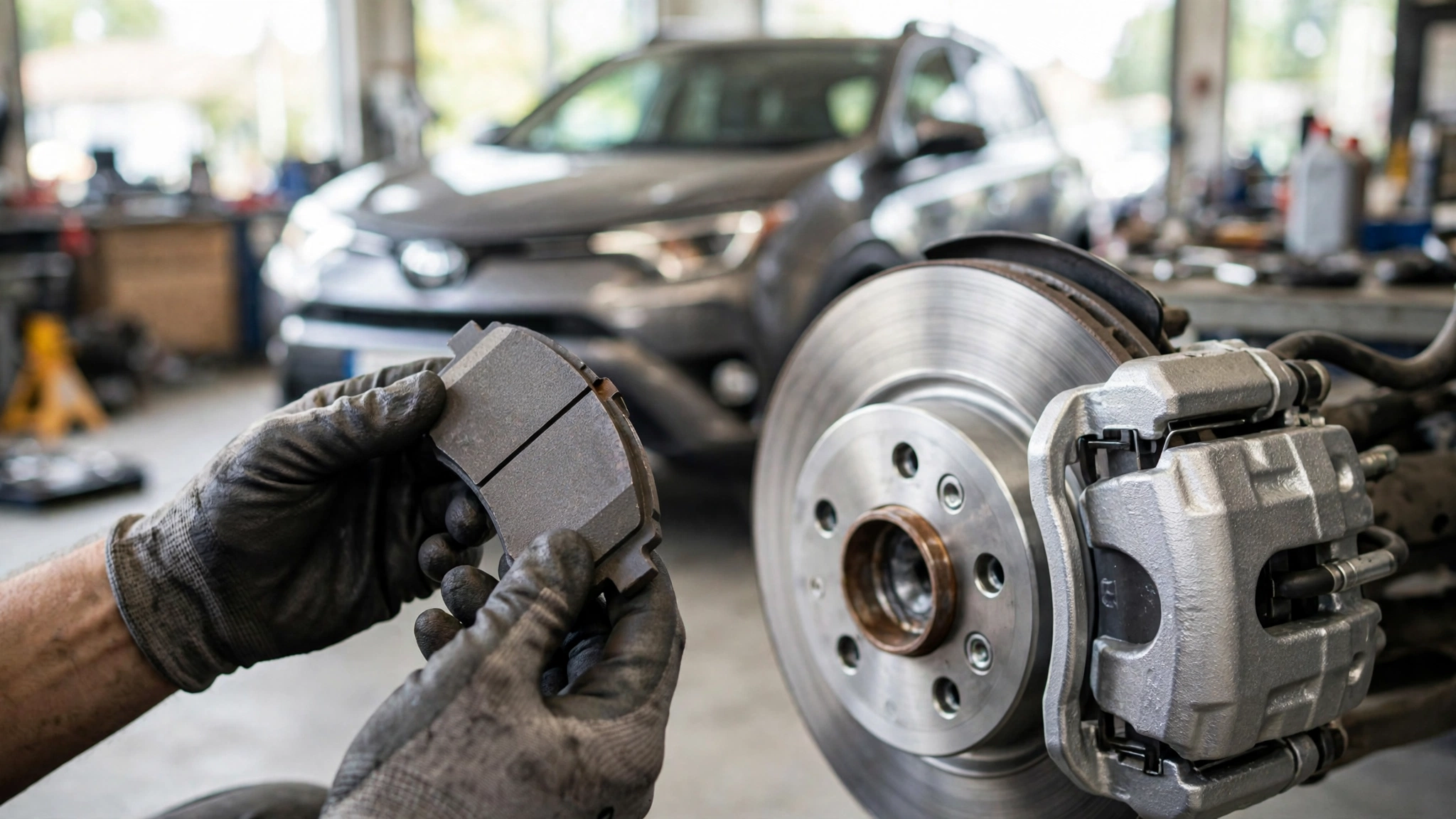
A Toyota hybrid owner recently pulled a rear brake pad at 138,000 miles — and the friction material still stood tall, wear slot deep, no scoring. On a gas car that pad would have been metal-on-metal twice over. That is not a fluke photo. In a Torque News poll of original Prius owners, 60% said their pads and rotors lasted past 100,000 miles, and 20% got past 200,000. No owner in that poll picked an option under 60,000 miles. Your hybrid is not wearing its brakes out slowly. Most days, it is barely using them at all — and that creates a completely different set of problems most owners never hear about until a caliper seizes.
The Short Answer
| Gas car | Hybrid | |
|---|---|---|
| Typical front pad life | 30,000–70,000 miles | 80,000–120,000+ miles |
| Common owner reports | Replacement at 40,000–50,000 | Original pads past 100,000 |
| Outliers | 100,000 with gentle highway use | 150,000–250,000+ |
| Main killer | Wear from friction and heat | Rust, seized pins, age — not wear |
That is the “twice as long” claim in the title, and if anything it is conservative. Research roundups put hybrid pad life at 2–3 times a comparable gas car. The mechanism is simple. The bill when it finally comes is not always simple — read the failure section before you assume brakes are a free ride for 150,000 miles.
How Regenerative Braking Steals the Pads’ Job
In a gas car, every stop is friction. Pads squeeze a spinning rotor, kinetic energy becomes heat, heat becomes worn pad material and brake dust. Gone forever.
In a hybrid, the electric motor that drives the wheels runs in reverse when you slow down. It becomes a generator: the wheels turn the motor, the motor makes electricity, the electricity goes back into the hybrid battery. That generator drag is what slows the car — before the friction brakes do meaningful work.
The blend is managed many times per second. Press the pedal gently and the car asks: how much of this can regen do? It depends on battery charge, temperature, and speed. As you slow, regen does more of the work — until roughly the last few miles per hour, when the motor can no longer generate useful current and the friction brakes take over for the final crawl to a stop. Hard stops, panic stops, and stops with a full battery also call the pads in.
Energy recovered is the wallet translation: U.S. Department of Energy figures cited in hybrid braking guides put recovery at roughly 5–9% of driving energy over typical mixed driving for hybrids (about 22% for full EVs). Every percent recovered is a percent the pads did not have to burn off as heat.
That is why city driving — the cycle that destroys gas-car brakes — is where hybrids shine most. Every red light is a recharge, not a wear event.
What Owners Actually Report
Owner data is not lab data, but on this question it all points the same way:
- Torque News / Prius Club poll: 60% past 100,000 miles on original pads and rotors, 20% past 200,000, 6% between 160,000–200,000.
- PriusChat threads are full of the same pattern: a 2008 Prius at 140,000 miles on original pads asking if that is normal (it is); a 2006 replaced at 132,000; one owner reporting 300,000 miles on fronts with original, smooth rotors — driven gently, which matters.
- The 138,000-mile Venza Hybrid rear pad (a mechanical twin of the RAV4 Hybrid) still had clear life left when its owner replaced it anyway.
Brutal honesty in the other direction: a Prius owner in Ontario replaced fronts at about 70,000 km (roughly 43,500 miles) and rears at 100,000 km, both down to metal, and blamed Canadian winter salt — with regular service done. Climate can erase the hybrid advantage. More on that below.
When You Actually Replace Them: The Numbers That Matter
Forget the calendar your gas-car habits taught you. On a hybrid, replace on measurement and condition, not mileage fear.
Pad thickness:
- New front pad: about 11 mm of friction material (model-dependent)
- Plan replacement at 3 mm
- Absolute minimum in many service specs: 1 mm — do not aim for it; at that point you are one hard stop from rotor damage
Cost when the day comes (as of 2026):
- Pads only, per axle, parts + labor: $150–$350 is the AAA-cited national installed range; RepairPal’s 2026 average estimate is higher, about $331–$390 per axle — compare the same axle, same parts, and whether rotors are included before you judge a quote
- Pads + rotors, per axle: roughly $400–$900+ depending on vehicle and shop
- DIY parts alone: about $20–$50 for economy pads, $40–$120 for ceramic, per axle set — labor is most of the shop bill
If a shop tells a hybrid owner at 50,000 miles “you need brakes” without showing you a measurement in millimetres, ask for the number. On a hybrid, that upsell works precisely because gas-car owners expect to need pads by then.
The Catch: Hybrids Kill Brakes by NOT Using Them
This is the part brochures and most listicles skip, and it is the most important section in this article.
1. Rotors rust. Friction brakes clean themselves by being used — each stop wipes the rotor face. Hybrid rotors can sit untouched through gentle commute after gentle commute, so surface rust builds, then pits. One upstate New York Prius v owner traced a full rotor replacement at just 30,000 miles to exactly this: gentle, regen-maximising driving plus heavy road salt. The pads were fine. The rotors were not.
2. Caliper slide pins seize. Pins need re-lubrication — owners and technicians commonly cite about every 3–4 years, more often in salt country. A seized pin means one pad drags or one pad never applies properly: rapid, uneven wear on a car whose pads were supposed to last forever.
3. Brake fluid ages on time, not miles. Fluid absorbs water whether the pads move or not. Many hybrid owners flush every 3 years regardless of pad thickness. Wet fluid lowers boiling point and corrodes the system from inside — including expensive hybrid brake actuator components you really do not want to price.
4. Too little wear can itself be a warning. That healthy-looking 138,000-mile rear pad has a second possible explanation: a rear caliper that quietly stopped doing its job. If one corner shows dramatically less wear than the others, do not celebrate — inspect the caliper.
The fix is not to drive badly. A few firm (safe, deliberate) stops from moderate speed on a clear road every so often keeps rotor faces clean. Neutral-coast techniques some models allow do the same. Then keep the boring services: pin lubrication, fluid on schedule, and a real inspection — pads, rotors, pins — at least around the 5-year mark even if thickness looks great.
Model Notes: Who Gets the Longest Life?
- Toyota / Lexus hybrids (Prius, Corolla Hybrid, RAV4 Hybrid, Venza, Highlander Hybrid): the benchmark. Mature brake-blending, the deepest owner record of 100,000+ mile pads.
- Honda hybrids (Accord Hybrid, CR-V Hybrid): strong regen and long pad life reported, though Honda’s earlier two-motor tuning asked more of friction brakes in some conditions — measure, don’t assume.
- Hyundai / Kia hybrids: competitive on paper; long-term owner pad-life data is thinner than Toyota’s. Treat 80,000+ as plausible, verify by inspection.
- Plug-in hybrids (RAV4 Prime, Prius Prime): the largest batteries accept more regen, so pad life can be the longest of all — and rotor rust risk the highest, especially if the car runs mostly electric on short trips.
- Mild hybrids (48V): do not buy the headline. A small motor that can barely move the car recovers little energy; pad life is much closer to a gas car.
Note for October 2026 shoppers: Toyota is recalling 30,978 model-year 2026 RAV4 Plug-in Hybrids in the US over software that can cause the hybrid system to shut down at higher speeds (NHTSA, reported Oct 14–15, 2026) — a software fix at the dealer, free. It does not change the brake-life story, but if you are cross-shopping a new RAV4 Prime this month, confirm the update is done before delivery.
Buying a Used Hybrid? Check Brakes Backwards
On a used gas car you ask: how much pad is left? On a used hybrid, ask the opposite questions too:
- Pads nearly new at 120,000 miles? Normal for a hybrid — or recently replaced because something seized. Ask why.
- Rotors pitted or scored despite thick pads? Classic under-use + salt pattern. Budget for rotors, not just pads.
- Uneven wear corner-to-corner? Suspect a sticking caliper or seized pins.
- Brake fluid records? No flush in 6+ years is a negotiation point — and a corrosion risk.
- Measure, don’t guess. Get pad thickness in mm on all four corners in the pre-purchase inspection.
Tools that pay for themselves on a hybrid
Lisle 81850 Combination Brake Lining Thickness Gauge Set — colour-coded steel gauges (red 2–3 mm = replace, yellow 4–6 mm, green 8–12 mm) so you can verify a shop’s “you need brakes” claim yourself in minutes.ITEQ Brake Fluid Tester Pen for DOT3/DOT4 — 5-LED moisture tester; because hybrid fluid ages on time, this tells you in seconds whether a flush is actually due.
When you buy through our links, we may earn an affiliate commission at no extra cost to you.
The Bottom Line
Yes — hybrid brake pads really do last about twice as long as a gas car’s, and often far longer: 100,000 miles is normal, 150,000+ is common, 200,000 happens. Regenerative braking does most everyday slowing, so friction does little work.
But “long-lasting” is not “maintenance-free.” The hybrid brake job you avoid at 50,000 miles can become a rotor-and-caliper job at 90,000 if rust and seized pins were ignored for a decade. Measure thickness, lube the pins, flush the fluid on time, and scrub the rotors with an occasional firm stop. Do that, and brakes become what the hybrid promise says they should be: one of the cheapest parts of owning the car.
Sources
- Torque News, Prius Club owner poll and 138,000-mile Venza Hybrid pad report: https://www.torquenews.com/1083/hidden-benefit-toyota-hybrids-prius-go-100k-needing-brakes and https://www.torquenews.com/1083/toyota-hybrid-suv-rear-brake-pad-shows-90-life-left-138000-miles-unusually-low-rear-wear-can
- Recharged, regenerative braking and brake-pad life guides (100,000+ miles, 2–3x longer, 5-year inspection): https://recharged.com/articles/does-regenerative-braking-use-brake-pads/ and https://recharged.com/articles/hybrids-with-regenerative-braking
- U.S. Department of Energy energy-recovery figures (hybrids ~5–9%, EVs ~22%), cited via hybrid braking guides: https://thehealthyattitude.com/m-auto/afs/default/rsoc/9a4193c9-6c67-4d10-9806-639a7d7585dc/hybrid-brake-pads-last-70000-to-100000-miles?channel=Ch_1851&tt=%7B%7Bcampaign.id%7D%7D_%7B%7Badset.id%7D%7D_%7B%7Bad.id%7D%7D
- PriusChat owner threads (140,000-mile original pads; salt-belt rotor rust at 30,000 miles; pin lubrication and fluid intervals): https://priuschat.com/threads/brake-life-question.145713/ and https://priuschat.com/posts/3455360/
- Brake replacement costs 2026 (RepairPal ~$331–$390/axle; AAA $150–$350/axle): https://topgeartrends.in/brake-pad-replacement-cost-in-2026-parts-labor-and-when-you-need-new-pads/ and https://jlbrakeservice.com/brake-advice/
- NHTSA recall, 30,978 x 2026 Toyota RAV4 Plug-in Hybrid, Oct 2026: https://www.usatoday.com/story/cars/recalls/2026/10/14/toyota-recalls-vehicles-rav4-plug-in-hybrid-model/92249703007/
Data current as of October 2026. Pad life varies with driving style, climate, and maintenance — measure your car, not the average.
Leave a Reply