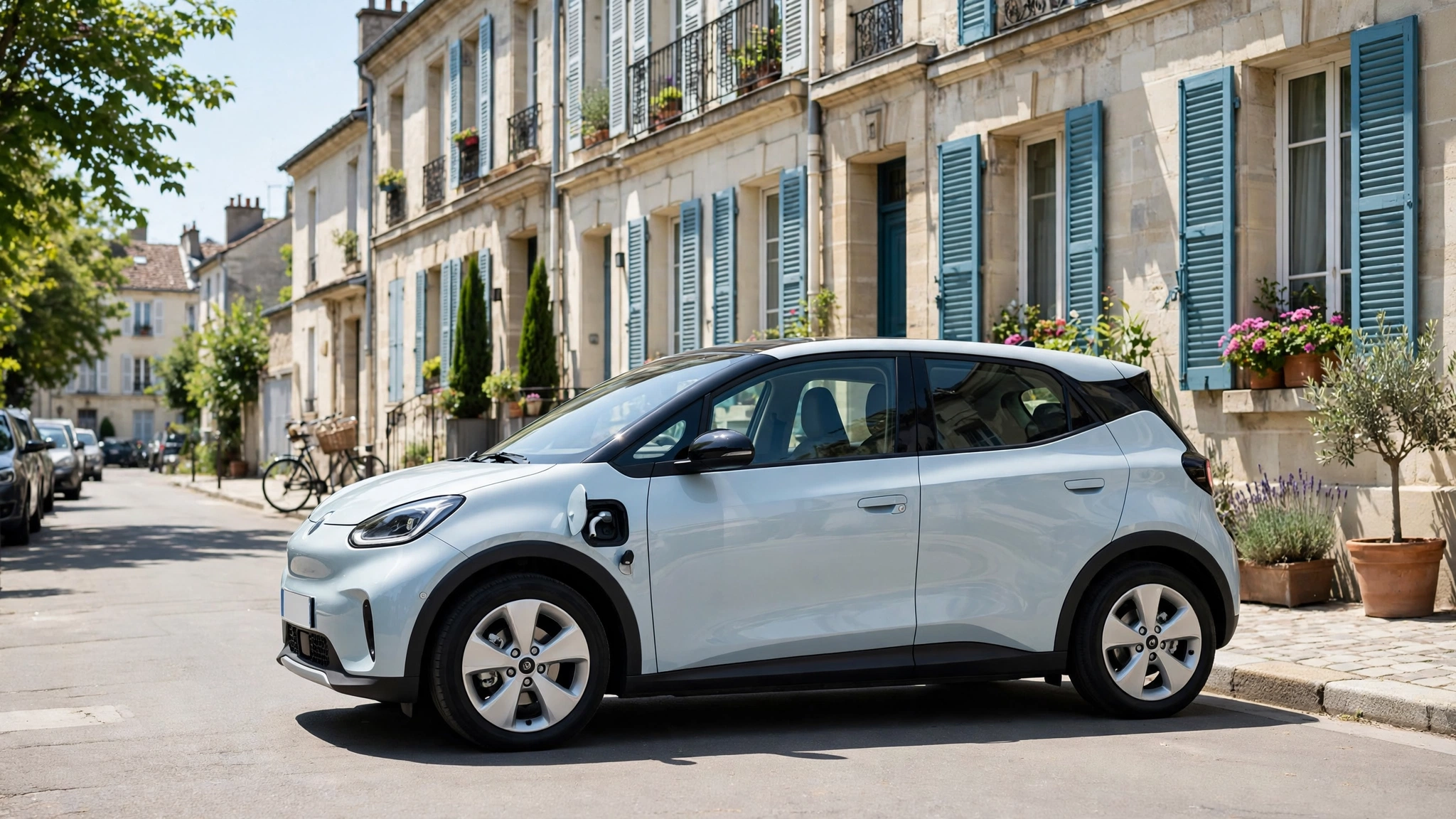
Leasing Social: How to Get an EV in France for Under €200 a Month
By DealShore Motors
Ninety-four euros a month. That’s the number France is putting on the table — a brand-new electric Citroën ë-C3, zero down payment, 15,000 km a year included. Not a typo, not a lease-trader hustle. It’s the third edition of France’s “leasing social” program, relaunched on July 16, 2026, backed by a €401 million envelope and 50,000 cars.
Here’s what the headlines skip: €94 buys you the base trim with the small battery. Insurance isn’t included in the cap. By late September 2026, several of the headline deals were already sold out at dealers. And a large share of the people who want in are disqualified before they ever reach a showroom. This is the full picture — who qualifies (as of 2026), what it actually costs per month all-in, which cars are still on the table, and the fine print that bites.
What leasing social actually is
Leasing social is a French government program that makes long-term leasing (LOA — lease with option to buy, or LLD — long-term rental) of new electric cars affordable for modest households. The state pays a subsidy worth 29% of the car’s purchase price, capped at €6,500 — rising to €9,000 when the car, its battery and its motor are all produced in the European Economic Area (Le Figaro, July 2026).
The dealer or leasing company advances that aid and deducts it from the lease, which is why the first rent drops to €0 and no deposit or down payment can be demanded. The contract runs at least 3 years (37-month terms are common), and the rent is capped at €200/month TTC, excluding insurance, options and services — with at least 25% of the offers priced under €140/month. Every contract includes at least 15,000 km per year with no extra charge (service-public.gouv.fr, verified July 31, 2026).
The previous editions set the pattern: the 2024 launch aimed for 20,000–25,000 cars and sold 50,000 in about a month before shutting early. The 2026 edition is bigger on paper — 50,000 slots — but by July 30, 2026, 19,500 orders were already filed, and by September, press reports cited around 34,000 applications. This thing moves fast.
Do you qualify? The three tests (as of 2026)
There are three hard gates, and all of them are checked against official documents. Miss one and you’re out.
1. The income test. Your revenu fiscal de référence (reference tax income) per tax share must be ≤ €16,880. If your first rent is paid in 2026, the figure used is the one on your 2025 tax notice (2024 income). This is a cliff, not a slope: €16,881 and the program doesn’t exist for you. For context, the autumn-2025 edition set the bar at €16,300 — the 2026 edition is slightly more generous, but still squarely aimed at modest households.
2. The driving test. You must use your personal car for work — either:
– your home is more than 10 km from your workplace (the trip must be made exclusively in your personal vehicle; employees need a certificate from their employer proving the distance), or
– you drive more than 8,000 km per year in the course of your professional activity with your personal vehicle.
Non-employees must provide a sworn statement plus proof of social-security affiliation for the current year. There’s an official eligibility simulator at primealaconversion.gouv.fr — run it before you fall in love with a car.
3. The first-timer rule. If you already benefited from leasing social in 2024 or 2025, you’re excluded from the 2026 edition. You must also be an adult resident of France — the program covers metropolitan France, the DROMs and Saint-Pierre-et-Miquelon.
The cars: what €94–€200 actually buys
Only new electric passenger cars qualify, and the bar is designed to keep Chinese-built cars out without naming them: the purchase price must be ≤ €47,000 TTC and the car must score at least 60 points on France’s environmental (CO₂ footprint) score — which accounts for manufacturing and transport emissions. In practice, the 20 eligible models are all European-built.
Launch prices announced in July 2026 (all “from” prices, before insurance):
| Model | From | Notes |
|---|---|---|
| Citroën ë-C3 | €94/mo | Cheapest offer; base trim, small battery |
| Fiat Grande Panda electric | €95/mo | ë-C3’s Stellantis sibling |
| Opel Frontera Electric | €99/mo | Listed higher (~€139) in Sept availability checks |
| Renault Twingo E-Tech | €130/mo | New Twingo, city-sized |
| Kia EV2 / Hyundai Inster / Nissan Micra | €137–139/mo | Korean/Japanese options |
| Renault 5 E-Tech | €139/mo | Evolution trim sold out by late Sept; Techno from €170 |
| Peugeot e-208 | €149/mo | Sold out by late Sept 2026 |
| Jeep Avenger | €169/mo | |
| Renault 4 E-Tech | €170/mo | |
| Peugeot e-2008 | €179/mo | Sold out by late Sept 2026 |
| Hyundai Kona Electric | €189/mo | Removed from Hyundai’s leasing page |
| Opel Mokka Electric | €189/mo | Sold out by late Sept 2026 |
| Renault Mégane E-Tech | €190/mo | The “family car” pick |
| Lancia Ypsilon Elettrica | €196/mo | |
| Alfa Romeo Junior / Peugeot e-308 | €199/mo | Top of the capped range |
(Launch prices via Le Figaro and Journal de l’Automobile, July 2026; availability status via mondial.paris, late September 2026.)
Two brutal-honesty notes on that table. First, the brochure price and the dealer price are different conversations: by late September, Peugeot’s entire leasing-social allocation was reserved, the cheapest Renault 5 trim was gone, and several Opel offers showed “épuisé.” If a model is sold out nationally, your dealer can’t conjure one. Second, the €94 ë-C3 is the base “Autonomie Urbaine” version — the small battery. It’s a commuter, not a road-tripper. Check the real-world range against your actual daily drive before signing, because you’ll live with that battery for three years.
The real monthly cost: the €200 cap is not the whole bill
This is where people get surprised, so let’s be blunt about what €94–€200 does and doesn’t cover:
- Insurance is NOT included in the capped rent. Comprehensive insurance (tous risques) is effectively mandatory on a leased car, and for the eligible profiles it typically adds €40–€80+/month — more for young drivers. Your real out-the-door number on a €94 ë-C3 is closer to €140–€175/month.
- Options and service packs are extra. The headline rents are for base trims; metallic paint, a bigger battery, or a maintenance contract push you up — and toward the €200 ceiling.
- Mileage beyond 15,000 km/year costs extra. 15,000 km sounds generous until you realize it’s ~290 km a week. If you commute 60 km a day, five days a week, you’re already at 15,000+ before weekend driving. Excess-kilometer penalties on French leases are real money — budget for your actual driving, not the brochure’s.
- At the end, you probably own nothing. With an LLD you hand the car back. With an LOA you can buy it at the residual value — but residuals after 3 years are often set high enough that buying makes little sense versus leasing another car. 36 payments and a returned car is the likely outcome. That’s fine if you went in with eyes open; it’s a trap if you thought you were “buying a car for €94/month.”
The catches that disqualify or disappoint people
- The income cliff. One euro over €16,880 per share and there’s no partial benefit — you’re simply out.
- Already used it? You’re done. 2024 and 2025 beneficiaries can’t come back for the 2026 edition.
- The employer certificate. The 10-km commute rule sounds simple until you need your employer’s HR department to certify it. Start that paperwork early.
- Sold-out models. The program is first-come, first-served per manufacturer’s allocation. The cheapest, most desirable trims go first — that’s why the €94 ë-C3 and €139 R5 Evolution were among the first to show “épuisé.”
- Charging reality. The math only works if you can charge cheaply. An apartment dweller relying on public fast chargers — which can cost nearly as much per km as diesel — wipes out most of the fuel savings. Home or workplace charging is what makes this deal genuinely cheap to run. A portable charger you can plug into a standard outlet is the minimum viable setup for anyone without a wallbox.
- Not a purchase aid. If your goal is to own a car, this program rents you one for three years. Compare honestly against a cheap used EV or a microcredit (microcrédit personnel, up to €8,000 over 7 years via social support organizations) before deciding the lease is your path.
How to apply (as of 2026)
- Check eligibility first with the official simulator at primealaconversion.gouv.fr — it takes minutes and uses your tax notice figures.
- Go to a participating dealer or approved leasing company (loueur conventionné) with: ID, your tax notice (avis d’imposition), the employer distance certificate (or sworn statement + social-security proof), and proof of address.
- The professional advances the state aid — your first rent is €0 (excluding options/services), and no deposit can be legally demanded.
- Move fast but verify. With ~34,000 applications reported by September 2026 against 50,000 slots, the window is open but finite — and confirm on ecologie.gouv.fr or service-public.gouv.fr that the program is still accepting dossiers before you start.
The math that matters
Take the headline case: an ë-C3 at €94/month plus ~€50 insurance = ~€144/month all-in, 36 months, zero down. For a commuter currently spending €150–€200/month on diesel or petrol alone — before maintenance — the electric lease can genuinely cut the monthly transport bill, if home charging is available. That’s the scenario the program was built for: modest-income workers driving real kilometers, in a new car with a warranty, for less than their old car cost to fuel.
But if you barely drive, don’t qualify on income, or can’t charge cheaply, the deal collapses — and the program makes no apology for that. It’s targeted aid, not a universal discount. Know which side of the target you’re on before you apply.
This article is for information only and is not legal or tax advice. Eligibility rules and program status can change — verify current conditions on the official sources: ecologie.gouv.fr and service-public.gouv.fr.
Charging at home without a wallbox
If you land a leasing-social car but don’t have a dedicated wallbox yet, a portable charger that plugs into a standard outlet is the cheapest way to start charging overnight. These are our research-backed picks:
DealShore pick: Lectron Portable Level 1/Level 2 EV Charger (12A/40A, J1772) — dual-voltage portable unit: trickle-charge from a regular outlet now, step up to 40A Level 2 if you later install a 240V socket. One of Amazon’s best-selling EV chargers.
Budget pick: Lectron Level 1 EV Charger (ETL certified, J1772) — simple overnight charging from any standard outlet. Slow, but enough to refill a small-battery commuter like the ë-C3 overnight.
When you buy through our links, we may earn an affiliate commission at no extra cost to you.
Note: these are US-spec products with J1772 connectors — check your vehicle’s connector and local electrical standards before ordering.
Sources
- service-public.gouv.fr, “Social rental of electric cars (Leasing social 2026),” verified July 31, 2026 — eligibility conditions, rent cap, mileage terms: https://www.service-public.gouv.fr/particuliers/vosdroits/F39280?lang=en
- Le Figaro, July 7, 2026: eligible models and launch rents (€94–€199) — https://www.lefigaro.fr/conjoncture/citroen-renault-peugeot-voici-les-modeles-electriques-eligibles-au-leasing-social-20260707
- Le Figaro, July 30, 2026: 19,500 orders filed; €401M envelope; 50,000 households — https://www.lefigaro.fr/conjoncture/leasing-social-pres-de-20-000-francais-ont-deja-depose-leur-demande-pour-un-vehicule-a-bas-prix-en-juillet-20260730
- Journal de l’Automobile, July 2026: full eligible-model list and Stellantis offers — https://journalauto.com/constructeurs/leasing-social-2026-la-liste-complete-des-modeles-eligibles-et-des-offres-constructeurs/
- mondial.paris, late September 2026: availability status (Peugeot sold out, R5 Evolution sold out, Corsa/Mokka sold out) — https://mondial.paris/actualites/auto-pratique/leasing-social-2026-commandes-et-modeles-encore-disponibles-90051.html
- pleinleswatts.fr, 2026: FAQ — income threshold, distance rules, first-timer exclusion — https://pleinleswatts.fr/economies-aides/leasing-social-2026/
Program data current as of October 2026. Prices are launch offers announced July 2026 and may change with availability.
Leave a Reply