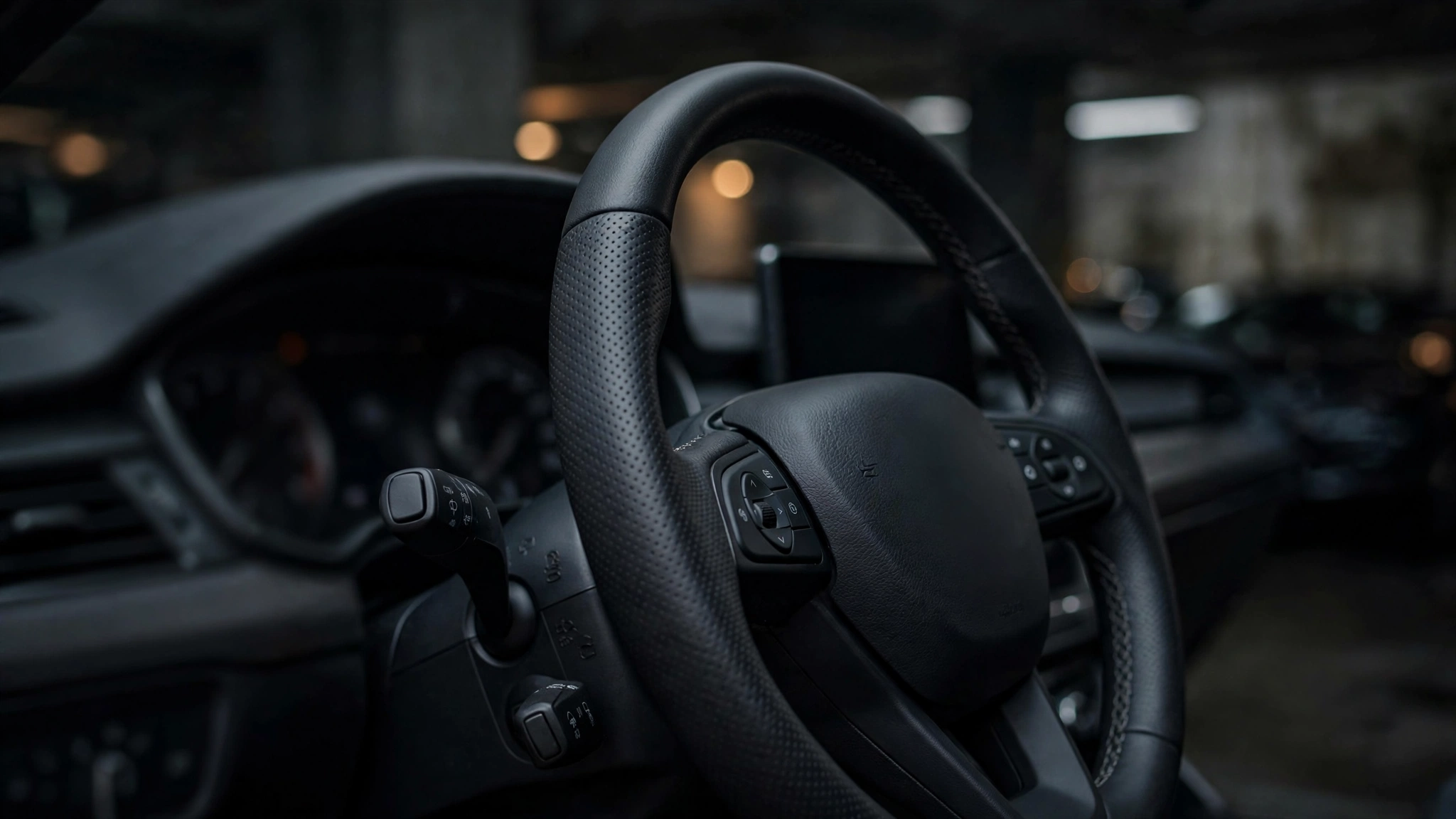
Volkswagen’s 4-Million-Car Recall: The Corroding Steering Bolt That Holds Your Steering Together
By DealShore Motors
The short version: Volkswagen Group is recalling roughly 4 million vehicles — VW, Audi, Skoda, and Seat, built between 2013 and 2024 — because a single bolt that fastens the steering rack to the subframe can corrode and fracture. It’s the company’s biggest recall since Dieselgate, the repair is free and takes about an hour, and if you own one of these cars you should check your VIN today.
The $2 Bolt That Broke 4 Million Cars
Here’s the part that should make every car buyer stop and think: a global automaker’s biggest safety action in a decade comes down to one fastener. A bolt. The kind of part that costs pocket change.
That bolt is one of two that hold the steering rack — the component that turns your steering wheel’s rotation into the wheels actually turning — to the car’s subframe. According to Volkswagen, the bolt is corrosion-prone: years of moisture and road salt can eat into it until the bolt head fractures. The steering rack is held by two of these bolts, so one failing doesn’t mean instant steering loss — but if the driver keeps driving, the remaining mount fatigues and can fracture too. At that point, you lose steering capability.
Volkswagen calls the recall precautionary. No crashes, no injuries, no property damage have been reported in connection with the fault. That’s genuinely good news — but let’s be honest about what “precautionary” papers over: the company started investigating the first reported corrosion case in October 2024 and only classified it as safety-relevant in September 2026. Two years. Eleven model years of cars shipped with the same vulnerable bolt.
Which Cars Are Affected
The recall spans four brands. Here’s the breakdown, based on figures from Germany’s KBA road-traffic authority and Volkswagen’s own statements:
| Brand | Models | Model years | Approx. units |
|---|---|---|---|
| Volkswagen | Golf, Tiguan, Touran, Caddy | 2013–2024 | ~2.16–2.6 million |
| Audi | Q3 | 2017–2024 | ~700,000 |
| Skoda | Octavia and others | 2013–2024 | 1+ million |
| Seat | Ateca, Tarraco | 2016–2024 | ~200,000 |
Key details worth knowing:
- About 900,000 of the affected Volkswagens were sold in Germany, where the recall first surfaced through the KBA. Roughly 370,000 affected Skoda Octavias are in Germany too.
- United States: NHTSA campaign 26V590 covers 208,724 vehicles — the 2018–2019 VW Atlas, 2018 VW Tiguan, and 2019–2021 Audi Q3. U.S. documents reportedly estimate that about 1% of covered vehicles may actually develop the defect.
- Left-hand drive only. Volkswagen Australia confirmed no Australian models are affected, and Audi clarified the recall applies to left-hand-drive vehicles — which means Europe, North America, and Latin America are in scope, not right-hand-drive markets.
- Where it breaks first: according to documents filed with NHTSA, the bolt fracture is most likely to occur during parking and low-speed maneuvering, where steering loads are highest.
What Owners Should Do Right Now
Don’t guess. Check.
- Check your VIN. In the U.S., use NHTSA’s recall lookup at nhtsa.gov/recalls — it’s free and takes 30 seconds. In Europe, check your manufacturer’s recall portal (Volkswagen, Audi, Skoda, and Seat all have VIN lookup tools) or contact your dealer directly.
- Book the repair. The fix is free: the dealer replaces the vulnerable bolt with a more corrosion-resistant one. Volkswagen says the job itself takes no longer than an hour.
- Call ahead. With 4 million cars potentially needing the same repair, parts availability and service capacity are real constraints. Don’t just show up — call your dealer, confirm they have the replacement bolt in stock, and book a slot.
- You don’t have to panic, but don’t ignore it either. Steering is the one system on a car that cannot be allowed to fail. A free one-hour fix is the cheapest insurance you’ll ever get.
Recall repairs are always free by law. If any dealer tries to charge you for the recall work itself, that’s a red flag — walk away and report it.
Shopping for a Used Golf, Tiguan, or Q3? Read This First
This recall just became a used-car buyer’s weapon — and a seller’s headache.
Any used Golf, Tiguan, Touran, Caddy, Q3, Octavia, Ateca, or Tarraco from the affected years could have an open recall on its record. That matters because:
- Check before you buy, not after. Run the VIN through the recall lookup before money changes hands. A car with an open safety recall is a car the seller should have fixed — or at minimum disclosed.
- Use it as leverage. An open recall means the car needs a dealer visit before it’s fully right. That’s a legitimate negotiating point on price.
- Get it fixed before you drive it home. The repair is free to whoever owns the car. But a steering fault is not something you “get around to.” If the seller hasn’t done it, book it yourself the week you buy.
This is exactly the kind of thing a pre-purchase inspection should catch — which is why running a VIN check and paying a mechanic for an hour of inspection time is the best money in used-car buying.
The Uncomfortable Questions
This site’s promise is telling you what the brochures don’t, so let’s say the quiet parts out loud:
Why did it take two years? The first corrosion case was investigated in October 2024. The recall came in September/October 2026. That’s two years of owners driving cars with a known-degrading steering fastener while the company decided whether it was “safety-relevant.” Precautionary is the right word for the recall; it was not precautionary speed.
Why did the bolt ship for 11 years? Model years 2013 through 2024 carry the vulnerable part. Whatever the cost-saving or engineering decision was that specified a corrosion-prone fastener in a safety-critical joint, it survived a decade of production. That’s a quality-control failure at industrial scale, not a fluke.
Volkswagen’s timing couldn’t be worse — for Volkswagen. The company is in the middle of a brutal cost-cutting fight, with factory closures and tens of thousands of job cuts on the table. A 4-million-car recall — free repairs, parts logistics, dealer capacity — is enormously expensive at the exact moment VW can least afford it. Volkswagen declined to comment on the recall’s cost.
No injuries is luck, not design. Nobody got hurt. That’s the only number that really matters, and VW deserves credit for the recall itself. But “no incidents yet” is not the same as “safe” — it’s the reason recalls exist.
FAQ
Is my car affected?
If you drive a left-hand-drive VW Golf, Tiguan, Touran, or Caddy (2013–2024), Audi Q3 (2017–2024), Skoda from the affected years, or Seat Ateca/Tarraco (2016–2024), check your VIN on your manufacturer’s recall portal or nhtsa.gov/recalls (U.S.). Right-hand-drive markets are reportedly outside the recall.
Is it safe to keep driving?
Volkswagen says the recall is precautionary and no incidents have been reported. But steering failure is a catastrophic failure mode. Get the free fix scheduled — don’t treat it as optional.
How long does the repair take?
Volkswagen says replacing the bolt takes no longer than an hour. With 4 million cars in the queue, book ahead and confirm parts availability.
Does the recall cost anything?
No. Recall repairs are free by law. The dealer cannot charge you for the recall work.
Will this hurt my car’s resale value?
An open recall on the record can spook buyers. A completed recall, with dealer documentation, is a non-issue — it shows the car was maintained. Get it done and keep the paperwork.
What if I already paid for a related repair?
Keep your receipts. If you paid out of pocket for a steering-rack bolt repair that the recall now covers, contact the manufacturer about reimbursement — automakers routinely reimburse for recall-covered work done before the campaign.
Sources: Reuters/Handelsblatt reporting on the VW Group recall (Sept. 25, 2026); Germany’s KBA figures via Handelsblatt; Automotive News via Drive.com.au (affected models and years, Oct. 2026 updates); Volkswagen USA confirmation to CarBuzz (NHTSA campaign 26V590, 208,724 U.S. units); NHTSA documents on fracture conditions; Volkswagen statements on the precautionary recall and repair time.
Leave a Reply