Drunk Driving Limits by State: What .08 Actually Means
By DealShore Motors
Here’s a fact that surprises most people: in 1983, Utah became the first state in America to set the drunk-driving limit at .08. Seventeen years before the federal government pushed everyone else to follow. Then, on December 30, 2018, Utah went first again — dropping its limit to .05, and it remains the only state to do so as of 2026.
That’s right: one state says two beers can be a DUI. Forty-nine states and the District of Columbia say the line is .08. Same country, same cars, two different answers — and the distance between them is the difference between a legal dinner and a revoked license.
So what does .08 actually mean? How many drinks is that? And what happens when you cross the line? Let’s get into the numbers.
What BAC Actually Is
BAC stands for blood alcohol concentration. It’s the weight of alcohol in a set volume of your blood, expressed as a percentage.
A BAC of .08 means 0.08 grams of alcohol per 100 milliliters of blood — roughly 8 drops of pure alcohol in a quart of blood. It sounds tiny because it is. The human brain doesn’t need much interference to start misfiring.
Most states use what lawyers call per se laws: if your BAC tests at .08 or higher, you are legally impaired, full stop. The officer doesn’t need to watch you swerve. The number is the evidence.
And here’s something people miss: you can be arrested for drunk driving below .08. In most states, an officer who observes clear signs of impairment — slurred speech, failed field sobriety tests, dangerous driving — can arrest you at .06 or even .05. The per se limit is the automatic line, not the only line.
How Many Drinks Is .08? The Honest Answer
First, the standard drink. In the United States, one standard drink contains about 0.6 fluid ounces of pure alcohol — that’s:
- One 12-ounce can of 5% beer
- One 5-ounce glass of 12% wine
- One 1.5-ounce shot of 80-proof liquor
That restaurant margarita that’s the size of a fishbowl? That’s not one drink. That “pint” of 9% IPA? That’s not one drink either.
Now the math. Roughly, for a person drinking standard drinks on an empty-ish stomach:
- A 180-pound man reaches ~.08 after about 4 drinks in one hour
- A 180-pound woman reaches ~.08 after about 3 drinks in one hour
- A 120-pound woman reaches ~.08 after about 2 drinks in one hour
These figures come from state DMV BAC charts (California’s Office of Traffic Safety prints almost exactly these numbers on its “Know Your Limit” cards). But “roughly” is doing heavy lifting, because BAC is shaped by at least six variables:
- Weight. More body mass means more fluid to dilute the alcohol. Smaller people hit .08 faster on fewer drinks.
- Sex. Women typically reach higher BACs than men of the same weight because they have less water and more body fat percentage — alcohol distributes in body water, not fat. Hormonal cycles can shift it further.
- Food. Drinking on an empty stomach spikes your BAC faster. A full meal slows absorption.
- Time. Your body burns alcohol at a near-fixed rate of about .015% per hour — roughly one standard drink per hour. Drink three beers in 60 minutes and you’re carrying nearly all of it. Spread them over four hours and your liver is working through them as you go.
- Drink strength. Bars pour heavy. Beer styles vary wildly. The “one drink” unit assumes standard pours at standard strengths.
- Medications and health. Dozens of common medications change how alcohol hits you. So do fatigue, illness, and age.
No chart can tell you your actual BAC. Only a breath or blood test can. And here’s the kicker the charts don’t show: impairment starts well below .08. Laboratory studies (Moskowitz et al., widely cited by NHTSA) show driving-relevant impairment beginning at levels under .08 — slower reaction time, worse lane tracking, dumber risk decisions. That matters more than the exact number on the next chart.
What Alcohol Does to Your Driving, BAC by BAC
You don’t need a test to feel most of this. What you feel is the impairment doing its job — alcohol also disables the part of the brain that judges impairment:
| BAC | What happens |
|---|---|
| .02 | Warmth, relaxation, slight euphoria. Judgment already softening at the edges. |
| .05 | Exaggerated behavior, lower inhibitions, reduced alertness. Reaction time measurably slower. This is Utah’s legal line — and the level where the National Transportation Safety Board has recommended all states draw it. |
| .08 | Muscle coordination reduced. Concentration, judgment, and self-control slipping. Steering, braking, and speed control get sloppy. The legal line in 49 states. |
| .10–.15 | Clear deterioration: slurred speech, poor balance, slow reactions, impaired vision. Crashes become dramatically more likely. |
| .16–.19 | Nausea, sloppy drunkenness, major blackout risk for some. |
| .20–.29 | Disoriented. Can’t stand or walk unaided. Blackouts likely. Many people need help at this point; some can’t be woken. |
| .30+ | Stupor, coma, risk of death. Alcohol poisoning territory. |
Notice where .08 sits: it’s not the beginning of impairment. It’s roughly the middle of the curve. The first two beers already took the edge off your reaction time — .08 is where most states finally agree you shouldn’t be behind a wheel.
The National Picture, as of 2026
Here’s the lay of the land in the United States:
- 21+ in a regular vehicle: .08 in 49 states and D.C. Utah is .05 — the only state in the country.
- Commercial drivers (CDL): .04 nationwide, set by federal regulation.
- Under 21: .02 or lower in every state — so-called “zero tolerance” laws. Several states set it at absolute zero for young drivers.
- Prior DUI offenders: a handful of states (Nebraska, North Carolina, Vermont, Virginia) set lower BAC limits for people with DUI convictions.
A few more wrinkles worth knowing:
- Colorado and New York have “driving while ability impaired” offenses that kick in at BACs below .08.
- West Virginia can revoke a license at a BAC above .05.
- In 2021, 53% of U.S. drivers told AAA’s traffic safety survey they supported lowering the limit to .05 nationwide (AAA Foundation for Traffic Safety, cited in NHTSA’s Countermeasures That Work).
The Utah experiment, so far
Utah is the live laboratory. When the .05 law took effect on December 30, 2018, restaurant groups warned it would criminalize the “single glass of wine with dinner” and tank tourism. NHTSA’s formal evaluation, published in 2022, found the opposite:
- Fatal crashes fell 19.8% comparing 2019 to 2016 (18.3% for the fatality rate), versus a 5.6% decline nationally over the same window. Adjusted for miles driven, the drop was about 13%.
- No spike in DUI arrests. Enforcement didn’t become a dragnet.
- No measurable hit to restaurant business, tourism, or alcohol sales.
A 2026 peer-reviewed study (American Journal of Preventive Medicine) went further with county-by-county comparisons against Utah’s neighbors over 2013–2023: Utah’s alcohol-related fatalities declined more than surrounding states’ — and the effect extended above the .05 threshold, suggesting the law didn’t just catch the .05–.08 crowd. It changed behavior broadly. People heard the message and drank less before driving, period.
What Happens When You Cross the Line
Laws vary by state, and this is the part of the article where we have to say the honest thing: this is not legal advice. Penalties change, states differ, and the only authoritative source is your state’s DMV or a lawyer. That said, here’s the shape of what a first-offense DUI typically costs in the U.S.:
- Fines: commonly $500 to $2,000+ for a first offense, and several states go higher.
- License suspension: typically 90 days to a full year, often more on repeat offenses.
- Jail: many states allow up to 6 months for a first offense (some mandate jail time even the first time).
- Ignition interlock: all 50 states now have interlock laws, and a growing number require the device — a breathalyzer wired into your ignition — even after a first offense. You pay for installation, monthly monitoring, and removal.
- Everything else: court fees, DUI school, probation, and insurance premiums that can double or triple for years.
All in, a first DUI is routinely cited as costing around $10,000 or more once fines, fees, lawyers, interlock, and insurance are stacked up. California’s traffic safety office puts its state’s average at $13,500. The real price is the one nobody quotes: the night in jail, the record, the job applications.
Enhanced penalties: the second line
Many states draw a second, higher line where punishments jump. Common thresholds:
- .15 — many states (Texas, Rhode Island, and others treat .15 as “aggravated” or enhanced DUI)
- .10 — Pennsylvania’s “high rate” tier starts here (.10–.159)
- .16 — Pennsylvania’s “highest rate” (.16+), South Carolina, Utah’s enhanced tier
- .17 — South Dakota | .20 — Tennessee
Blow double the limit — not uncommon; many DUI arrests are at .15–.20 or higher — and the same offense can mean mandatory jail, longer suspensions, and bigger fines.
And one more thing about testing: implied consent laws in every state mean that by driving on public roads, you’ve already agreed to chemical testing if arrested. Refusing the breath or blood test doesn’t save you — it triggers its own separate penalties, typically an automatic license suspension, and in some states additional criminal charges.
The Crash Data Behind the Laws
The numbers are why the laws exist. Per NHTSA’s 2023 Traffic Safety Facts:
- 12,429 people were killed in alcohol-impaired driving crashes in 2023. That’s one death every 42 minutes, day and night, all year.
- Alcohol-impaired deaths were 30% of all U.S. traffic fatalities — nearly one in three. The share has hovered at 28–32% for a decade.
- From 2022 to 2023, alcohol-impaired deaths fell 7.6% (13,458 to 12,429) — the second straight annual decline.
- Early data for 2024 continued the trend: roughly 11,904 alcohol-impaired deaths, down about 3.9%.
Progress, yes. But hold it against the scale: roughly 34 people a day still die in crashes involving a driver at .08 or above. And every one of those deaths, as NHTSA puts it, was 100% preventable. There is no mechanical failure, no weather event, no defective part in a drunk-driving death. It’s a choice someone made before turning the key.
Practical Guidance: The Part That Actually Saves Lives
No one sets out to become a statistic. Nearly everyone who drives impaired thought they were fine — which, as the BAC table above shows, is exactly what alcohol makes you think. So here’s the practical playbook, in order of reliability:
1. Decide before the first drink. The plan made at 9 p.m. beats the plan made at midnight. If you’re drinking, decide before you start how you’re getting home.
2. Rideshare or a designated driver. In 2026 this has never been easier. A rideshare costs a fraction of a DUI — and it scales with the night. If your group is big, one sober driver beats five “mostly fine” ones.
3. Eat, pace, and count. If you’re drinking at dinner, eat first, keep it to one standard drink per hour or fewer, and count honestly. But treat counting as harm reduction, not a legal strategy — no mental math is admissible against a breathalyzer.
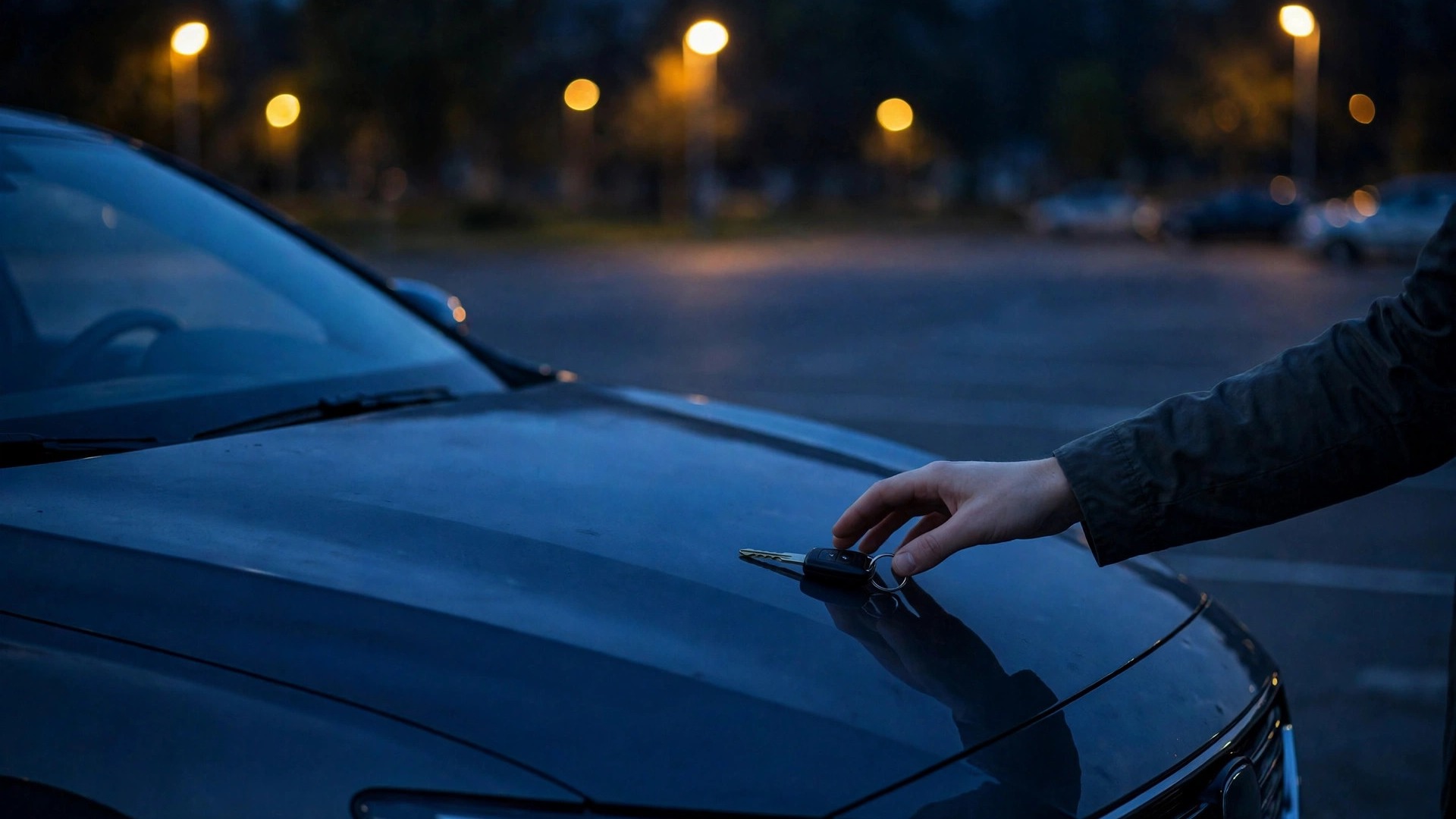
4. Hand over the keys. The physical act matters. Keys in a pocket are a decision waiting to be made; keys across the room are a barrier. “Take my keys” is the strongest sentence in drinking culture.
5. If you feel it, don’t drive it. Maine’s highway safety office has the best slogan in the business: “If you feel different, you drive different.” Impairment starts below the legal line. Feeling relaxed and slightly euphoric at .04 is your brain telling you its judgment circuits are already compromised.
6. Call it for someone else. Taking a friend’s keys when they’ve had too much isn’t rude — it’s the highest-value favor you’ll ever do. Offer the rideshare yourself.
The Bottom Line
.08 is not a magic number where sobriety ends and drunkenness begins. It’s a legal line drawn through the middle of a gradual slide — a compromise between science, which says impairment starts much lower, and a society that still has to get home from dinner. Utah’s experiment suggests the line could be .05 without ending civilization, and most of the world already agrees: the vast majority of countries set their limits at .05 or lower.
The number that matters most isn’t on any chart. It’s the decision you make before the first drink. A rideshare receipt is the cheapest car insurance you’ll ever buy.
Shopping for a safer car? DealShore Motors covers the safety systems — from automatic emergency braking to the crash-test ratings — that protect you when someone else’s decision puts you in harm’s way. More deep dives every week.
This article describes U.S. drunk-driving laws as of 2026 and is for information only — not legal advice. Laws change; check your state’s DMV for current rules.
Sources: NHTSA Traffic Safety Facts “Alcohol-Impaired Driving: 2023 Data” (2025); NHTSA Countermeasures That Work — Lower BAC Limits; NHTSA “Evaluation of Utah’s .05 BAC Per Se Law” (2022); Li et al., American Journal of Preventive Medicine (2026) county-level analysis of Utah’s .05 law; California Office of Traffic Safety “Know Your Limit” BAC chart; AAA Foundation for Traffic Safety 2021 Traffic Safety Culture Index; Insurance Institute for Highway Safety DUI law summaries; worldpopulationreview BAC Limit by State (2026).
Leave a Reply